
Why Sublingual Delivery Is Being Explored in Weight Maintenance
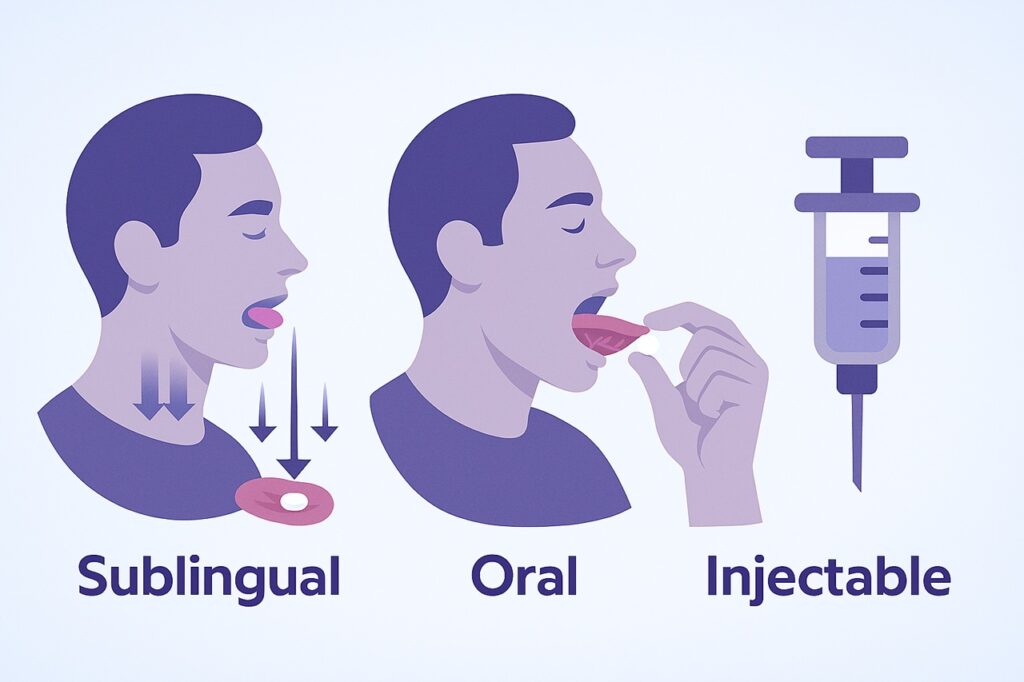
As weight management treatment evolves, so too does the way medication can be delivered. While injectable GLP-1 therapies remain the most established format, alternative routes — including sublingual delivery — are increasingly being explored within maintenance-focused care.
Sublingual administration involves placing a tablet under the tongue, where it dissolves and is absorbed through the oral mucosa rather than being swallowed immediately. This route allows active ingredients to enter the bloodstream via the rich network of capillaries beneath the tongue.
One reason sublingual delivery is being considered in maintenance settings relates to digestive breakdown. When conventional tablets are swallowed, they must pass through the stomach and gastrointestinal tract, where enzymes and gastric acid can degrade peptide-based medications before absorption occurs. This is why some oral formulations require complex absorption enhancers or strict fasting protocols.
By contrast, sublingual absorption bypasses initial exposure to the digestive system. This may allow more direct systemic uptake in certain formulations, particularly when doses are low and intended for supportive rather than therapeutic use.
Convenience is another important factor. Many individuals who have used injectable medication for weight loss reach a point where long-term needle use becomes burdensome. Needle aversion, injection fatigue, travel constraints, and refrigeration requirements can all affect adherence over time.
Sublingual tablets offer a discreet, portable, and needle-free alternative. They require no cold storage, can be taken quickly, and integrate easily into daily routines — factors that are especially relevant in long-term maintenance planning.
It’s important to note that absorption via the sublingual route is formulation-dependent and not assumed to be equivalent to injectable delivery. Suitability must always be assessed clinically.
However, as maintenance models develop, sublingual delivery represents a practical, patient-friendly option within a broader spectrum of weight stability support strategies.
Related Resources
The Role of GLP-1 Medication in Modern Weight Management
The Role of GLP-1 Medication in Modern Weight Management Over…
Why Microdosing GLP-1 Medication May Support Weight Maintenance
Why Micro dosing GLP-1 Medication May Support Weight Maintenance For…

Introducing the Eat Less Method
Losing weight is often seen as the hardest part of…