
About Liraglutide
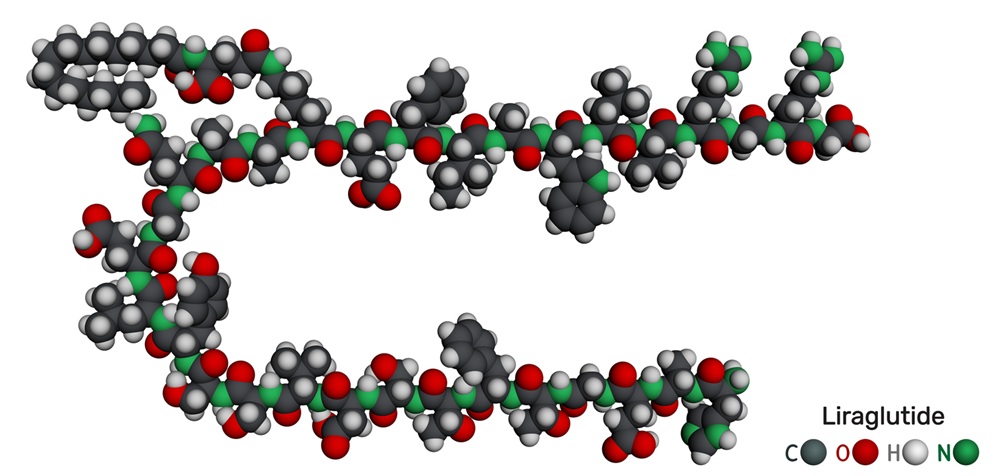
Liraglutide is a prescription-only medicine that has been used in the UK and internationally for the management of obesity, overweight and type 2 diabetes under appropriate medical supervision.
It belongs to a class of medicines known as GLP-1 receptor agonists. These medicines act on the same receptor as the naturally occurring hormone GLP-1, which is involved in appetite regulation, satiety, digestion and glucose control.
Liraglutide has been used clinically for more than a decade and has an extensive evidence base in metabolic medicine.
How Liraglutide Works
Liraglutide activates GLP-1 receptors in several areas of the body involved in appetite and metabolic regulation.
Its effects can include:
- Increasing feelings of fullness and satiety
- Reducing hunger and appetite
- Helping reduce persistent thoughts about food or “food noise”
- Supporting glucose-dependent insulin release
- Reducing inappropriate glucagon secretion
- Slowing gastric emptying
For people who respond well to treatment, these effects can make it easier to manage portion sizes, reduce excessive hunger and maintain healthier eating patterns..
Liraglutide and Weight Management
Liraglutide has been extensively studied as a treatment for obesity and overweight.
Clinical trials using licensed weight-management doses have demonstrated meaningful reductions in body weight when liraglutide is used alongside dietary, behavioural and physical-activity measures.
However, losing weight and maintaining weight are not necessarily the same clinical challenge.
Once a person has reached a weight they are comfortable with, the objective may shift away from continuing to maximise weight loss and towards helping them maintain a stable weight over the longer term.
At the Eat Less Method, this distinction is central to our approach.
Weight Loss vs Weight Maintenance
Active Weight Loss
During active weight-loss treatment, medication may be gradually increased to an appropriate therapeutic dose with the aim of producing clinically meaningful weight reduction.
The focus may include:
- Reducing excessive appetite
- Increasing satiety
- Supporting portion control
- Achieving progressive weight reduction
Weight Maintenance
Maintenance begins when the priority changes from losing additional weight to protecting the progress that has already been made.
The aim may instead be to support:
- Weight stability
- Appropriate appetite control
- Prevention of rebound hunger
- Sustainable eating habits
- Reduced risk of significant weight regain
- A treatment approach that remains practical over time
At the Eat Less Method, our focus is specifically on this longer-term maintenance phase.
Why Long-Term Maintenance Matters
Weight regulation is complex.
Appetite, hunger, metabolism, previous weight loss and biological responses to reduced body weight can all influence whether weight is maintained successfully.
Research with GLP-1 medicines has shown that weight regain can occur after treatment is discontinued. This is one reason obesity is increasingly approached as a chronic condition that may require ongoing management rather than a short-term intervention.
That does not mean every patient needs the same medicine, dose or treatment intensity indefinitely.
Instead, maintenance should be reviewed individually.
A Lower-Intensity Approach
Some patients who have already achieved substantial weight loss may no longer require the same degree of appetite suppression that was useful during active treatment.
In selected patients, a prescriber may consider whether a lower-intensity strategy is appropriate.
The aim is not necessarily further weight loss.
Instead, treatment may be intended to provide sufficient support to help with:
- Rebound hunger
- Appetite stability
- Portion control
- Maintaining established eating habits
- Reducing the likelihood of significant weight regain
The appropriate dose and treatment strategy will vary between individuals.
Lower-dose or alternative maintenance regimens should not be assumed to have the same evidence base as licensed liraglutide treatment schedules and may represent off-label use. Any such treatment must therefore be assessed and prescribed on an individual basis by an appropriately qualified clinician.
Liraglutide Compared with Semaglutide
Liraglutide and semaglutide are both GLP-1 receptor agonists, but they are different medicines.
Both act on the GLP-1 receptor, but their pharmacology and duration of action differ significantly.
Liraglutide
Liraglutide has a shorter duration of action, with an elimination half-life of approximately 13 hours following conventional subcutaneous administration.
Licensed injectable liraglutide is therefore traditionally administered once daily.
Its shorter duration means that drug exposure can change more quickly when treatment is adjusted or discontinued.
Semaglutide
Semaglutide is considerably longer acting, with an elimination half-life of approximately one week.
Injectable semaglutide can therefore be administered once weekly.
At established weight-management doses, semaglutide has generally produced greater average weight loss than liraglutide in clinical trials.
Why Might the Difference Matter?
During active weight loss, the greater weight-loss efficacy of semaglutide may be clinically valuable for appropriate patients.
During maintenance, however, the goal may be different.
Some patients may benefit from a strategy that focuses on maintaining appropriate appetite control rather than continuing to pursue maximum appetite suppression or additional weight loss.
For this reason, the most appropriate medicine is not determined simply by which treatment produces the greatest average weight loss.
The choice should take account of:
- How much weight has already been lost
- Current weight stability
- Appetite and hunger
- Previous treatment response
- Side effects and tolerability
- Previous GLP-1 medication
- Patient preferences
- Risk of weight regain
- Long-term treatment objectives
Why Liraglutide May Be Considered for Weight Maintenance
Liraglutide has several characteristics that make it of interest when considering an individualised maintenance strategy.
These include:
- More than a decade of clinical experience
- An extensive evidence base in weight and metabolic health
- Well-characterised GLP-1 pharmacology
- A shorter duration of action than semaglutide
- The possibility of adjusting treatment according to individual response
- Potential use within a lower-intensity strategy where clinically appropriate
This does not mean liraglutide is inherently better than semaglutide for maintenance.
Rather, the medicines have different characteristics, and the appropriate option depends on the individual patient.
Our Approach at the Eat Less Method
At the Eat Less Method, we believe successful long-term weight management should be individualised.
The objective is not to keep every patient on the highest dose of the most powerful medication indefinitely.
Instead, our aim is to identify the lowest appropriate treatment intensity that supports weight stability and remains clinically suitable for the individual.

A maintenance plan may take into account:
- Your previous weight-loss treatment
- The amount of weight you have lost
- Your current weight trajectory
- Hunger and appetite
- Eating patterns
- Previous medication response
- Side effects
- Medical history
- Other medicines
- Personal treatment preferences
Treatment is reviewed by a qualified prescriber before any medication is recommended.
Safety and Prescribing

Liraglutide is a prescription-only medicine and is not suitable for everyone.
Before treatment is considered, an appropriately qualified prescriber must assess your medical history, current medicines, previous treatment and relevant risk factors.
GLP-1 medicines can cause side effects, most commonly gastrointestinal symptoms such as:
- Nausea
- Vomiting
- Diarrhoea
- Constipation
- Abdominal discomfort
More serious adverse effects are less common but may require urgent medical assessment.
A full clinical assessment is therefore an essential part of deciding whether treatment is appropriate.
At the Eat Less Method, our prescribing process includes appropriate medical screening, identity verification and clinician review before treatment is considered.
Important Information
This website provides general educational information about liraglutide and weight maintenance.
It does not replace individual medical advice.
Liraglutide is a prescription-only medicine. Treatment decisions must be made by an appropriately qualified prescriber following assessment of the individual patient.
Where a dose, formulation, treatment schedule or route of administration differs from an authorised product or its licensed indication, this may constitute off-label or unlicensed use and requires individual clinical assessment.
Patients should not start, stop or change the dose or method of administration of liraglutide without discussing this with their prescriber.